
Travel
Seychelles
Returning to the Seychelles
The Seychelles have been part of my life for a long time. I first came here with my family in 2011. We immediately fell in love with the archipelago and, especially, with La Digue — an island we returned to for the next three years, building friendships along the way. In 2019, I came back for my first solo trip. Six years later, for my sixth visit, I returned with my father as a Christmas gift. This time, the trip felt less like discovering a place and more like coming back to one I already knew.
I rarely give names to my photographs, but this one is called Silhouettes. On our first evening in Mahé, two children were playing in the water as the light disappeared. Behind them, almost perfectly aligned with their silhouettes, was Silhouette Island. Sometimes a title simply presents itself.
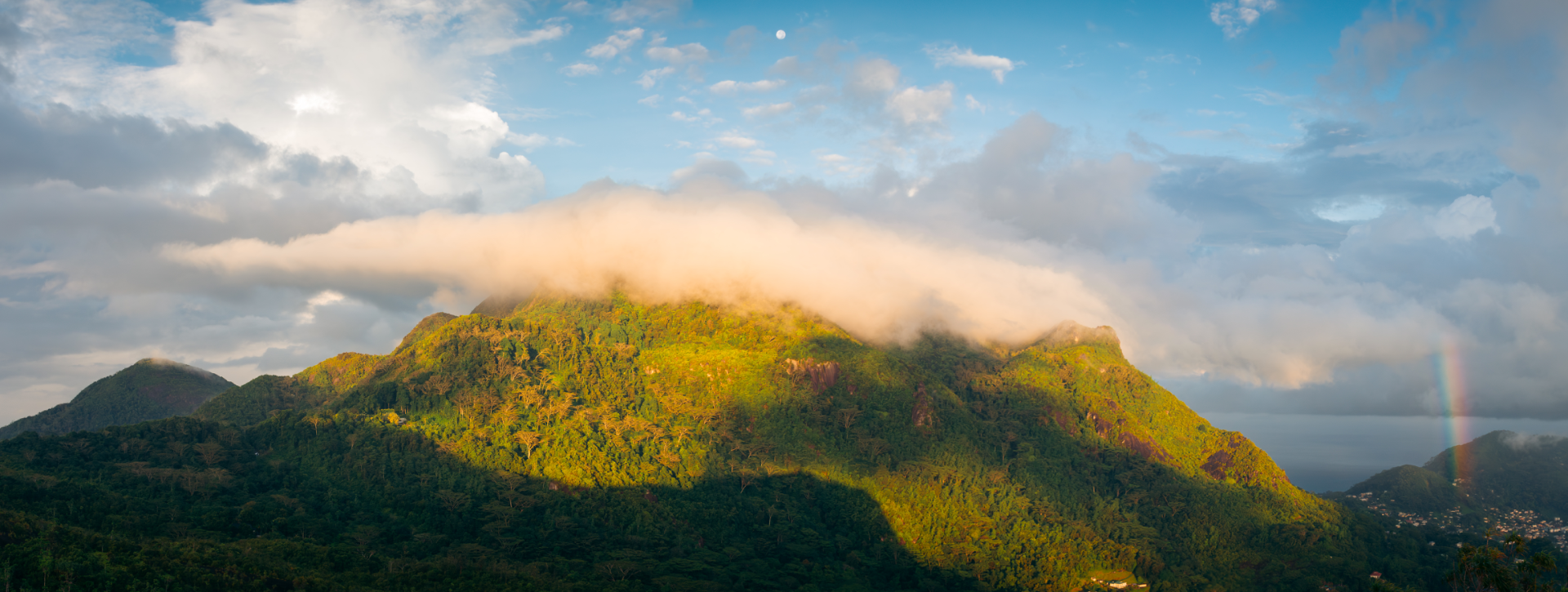
The following morning, we woke before sunrise and climbed into the hills above Mahé to watch the first light reach the island. Later that day, it was time to return to La Digue.
Back to La Digue
La Digue is the third most populated island in Seychelles, yet only around 3,400 people live there. After a short flight from Mahé followed by a boat ride, we arrived back on an island that had become deeply familiar over the years. One of the people we returned to see was Unels, a biologist who has spent years studying the island’s rare native species. Around the small guest house he built entirely himself, almost everything he needs grows from the land: vanilla, passion fruit, herbs and fruit trees. Once a week, he fishes with his son. Rice, he told me, is practically the only thing he does not grow himself.
Even the pool beside the guest house is fed naturally by a spring running through the property. Nearby, Unels created a small basin reserved for birds — a place he knew was regularly visited by one of La Digue’s rarest inhabitants.
The Seychelles paradise flycatcher, locally known as the Veuve, is found naturally only in Seychelles and has long been closely associated with La Digue. Unels had studied the species for years and knew that a pair sometimes came to cool themselves in the small basin near his home. So I waited. I spent most of the afternoon watching the trees and the water, hoping they would appear. When they finally did, I had only a few moments to photograph them as they took turns diving into the basin. The male was almost black, with deep blue reflections and an extraordinarily long tail. The female, lighter and brown, moved just as quickly. It remains one of the most memorable wildlife photography experiences I have had.
Tony
Another familiar stop was Tony’s workshop. He carves his pieces entirely by hand and sells them from a small souvenir shop on La Digue. Walking through his workshop, surrounded by wood, tools and unfinished sculptures, felt very different from the polished souvenir shops found elsewhere. Everything carried the marks of having been made by one person. Later, we stayed for food and conversation — exactly the kind of simple moment that had made La Digue feel familiar to us in the first place.
Between visits, we returned to the quieter parts of the island — following paths toward beaches that were harder to reach and often almost completely empty.
Bibiane
We ended the trip with Bibiane, beside the sea. Like so many people we had come to know on La Digue, she lives closely connected to the land around her, growing fruit only a few metres from the beach. After six trips to Seychelles, the landscapes are still extraordinary. But they are no longer the only reason I return. What makes La Digue different now are the people connected to it — the friendships, the familiar faces and the feeling of returning somewhere that has slowly become part of my own story.
Next story